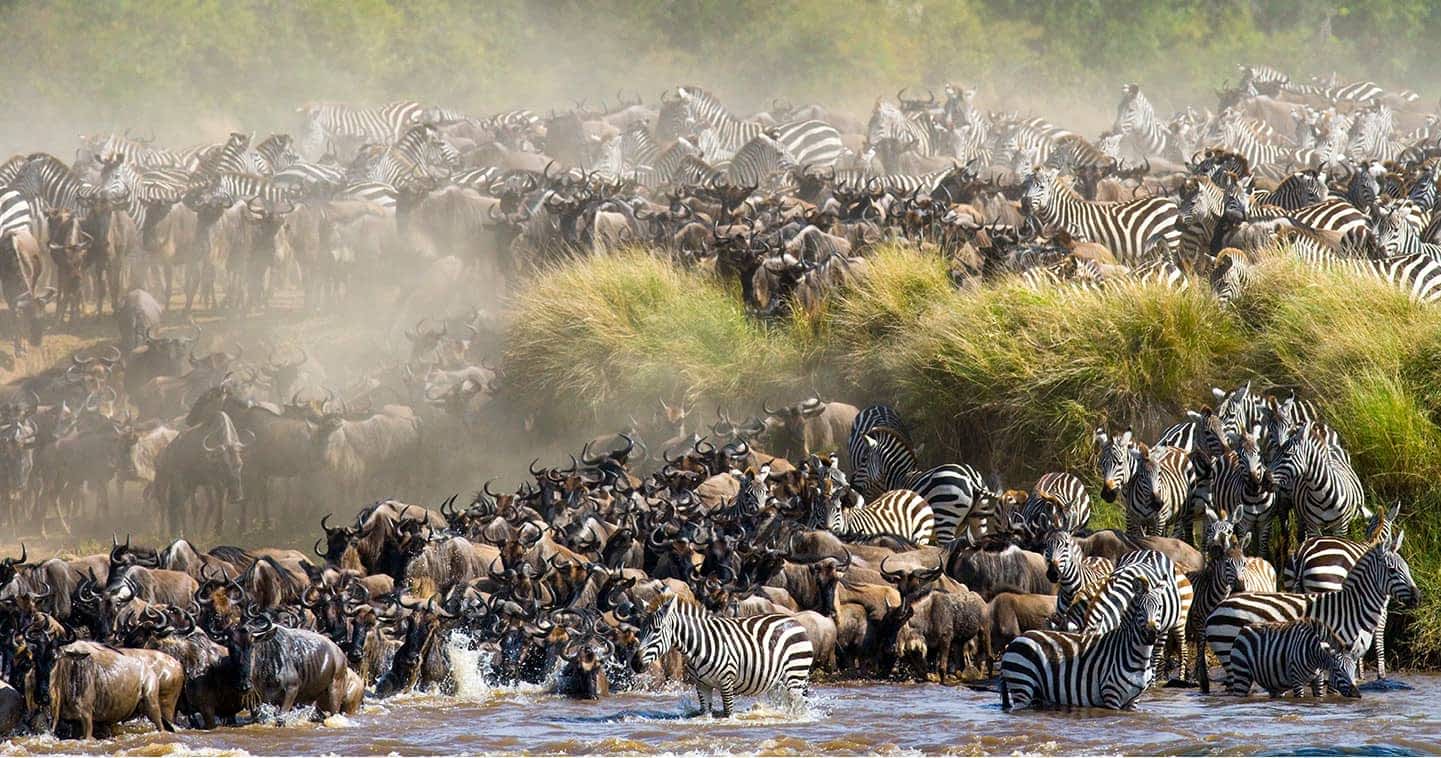
Join us as we explore fascinating facts about this awe-inspiring phenomenon, ensuring you have all the essential knowledge for an unforgettable safari adventure.

The Great Wildebeest Migration Unveiled:
The Wildebeest Migration stands as a testament to the wonders of the natural world, captivating the hearts of adventurers and nature enthusiasts alike. As you embark on your journey to witness this majestic event, Prepare yourself for a safari experience that will leave you in awe of the power and beauty of nature.
Contrary to what many believe, the migration does not sweep across Kenya in its entirety. The wildebeest herds spend a significant part of their journey in the northern Serengeti and the adjacent Maasai Mara area. However, Tanzania boasts the migration throughout the year, making it an ideal destination for witnessing this awe-inspiring phenomenon.
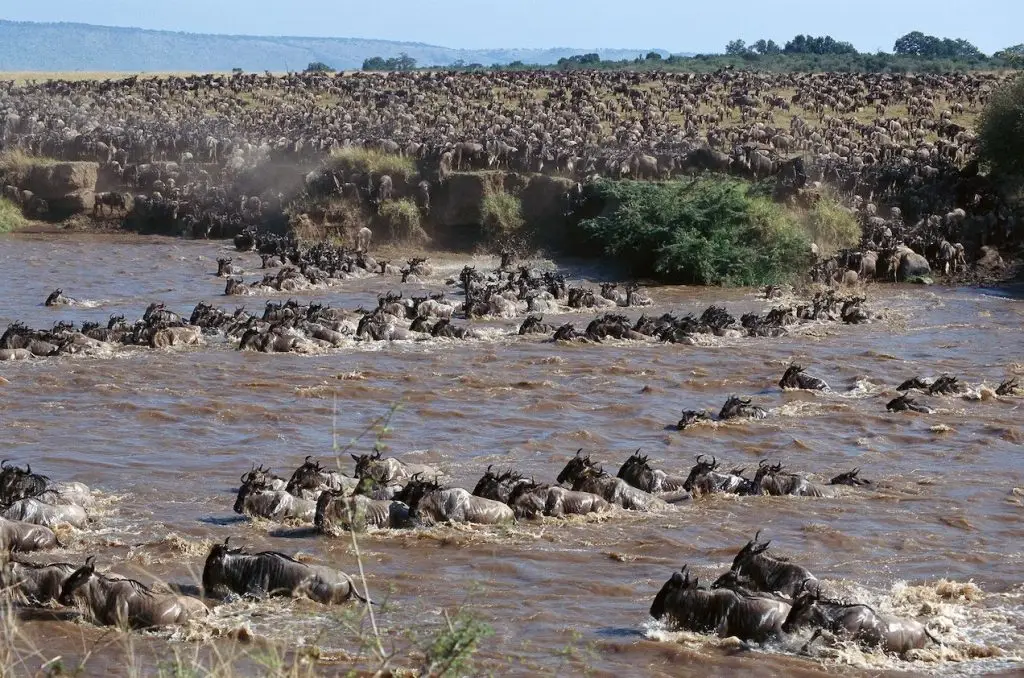
The migration is a year-round event, driven by rainfall and the search for fresh grazing pastures. As the herds traverse the East African plains, they encounter various challenges, including crossing the treacherous Mara River, where hungry crocodiles await their chance to strike.
Spectacular & Breathtaking:
The Great Wildebeest Migration is a spectacle that extends beyond wildebeest alone. It encompasses an array of herbivores, including zebras and gazelles, resulting in an incredible showcase of life and movement against the breathtaking backdrop of the African savannah.
To experience the migration at its peak, plan your visit between July and October, when the herds usually congregate in the northern Serengeti and Maasai Mara regions. Remember, wildlife behaviour can be unpredictable, making each migration season unique and full of surprises.
As we explore the wildebeest migration here are 10 fascinating facts about this phenomenon.
Massive Numbers:
The Wildebeest Migration involves over two million wildebeest, accompanied by hundreds of thousands of zebras and gazelles. Witnessing this immense congregation is a truly awe-inspiring sight.
Constant Movement:
The migration is a year-round event, with the herds continuously on the move in search of fresh grazing pastures and water sources. The circular journey covers an impressive distance of approximately 800 kilometers (500 miles) each year.
River Crossings:
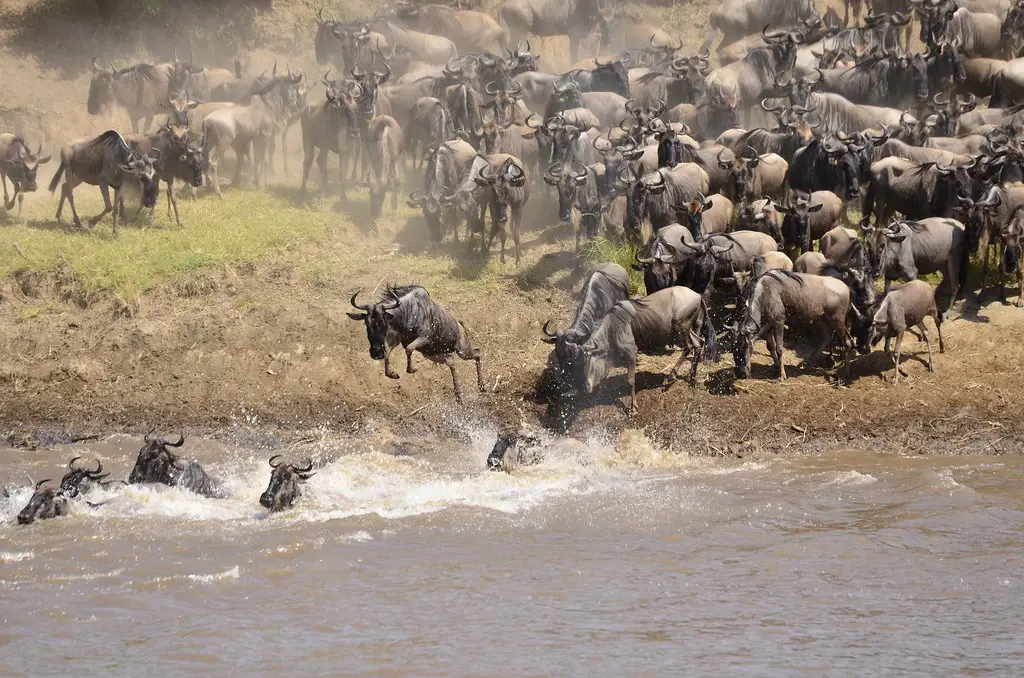
One of the most thrilling moments during the migration is when the herds face the daunting Mara River crossing. Braving strong currents and lurking crocodiles, the wildebeest and other herbivores showcase their resilience as they navigate this treacherous obstacle.
Births on the Move:
Remarkably, the majority of wildebeest calves are born during the migration itself. This strategic adaptation ensures that the young are born when there is an abundance of food and safety in numbers to protect them from predators.
Predators Follow the Herds:
The migration is a feast for predators, and they closely shadow the herds during their journey. Lions, hyenas, cheetahs, and other carnivores take advantage of the ample prey available during this time.
Synchronized Calving:
Wildebeest exhibit a fascinating behavior called “synchronized calving.” Within a short period, thousands of females give birth simultaneously, creating a “baby boom” that overwhelms predators and increases the chances of calf survival.
Navigational Skills:
Despite the absence of fixed migration leaders, wildebeest display impressive navigational abilities. They can recognize familiar routes and landmarks, ensuring the herds stay on course during their extensive journey.
Ecological Impact:
The migration has a profound ecological impact on the East African savannah. The constant grazing and trampling of the herds help rejuvenate the grasslands and create a mosaic of habitats that benefit a diverse range of wildlife.
Language of Communication:
Wildebeest communicate through a series of vocalizations and body language. Their distinct vocal calls help in coordinating movements, alerting the herd to potential dangers, and maintaining social cohesion.
Circular Migration:
The migration follows a circular pattern, moving from the southern Serengeti to the northern Serengeti and the Maasai Mara, and then back again. This cycle ensures that the herds have access to fresh grazing areas and water throughout the year.
At Lifestyle Safaris and Holidays, we recognize the significance of responsible tourism in preserving the habitats and ecosystems that support this extraordinary natural event. By choosing our ethical and sustainable safari experiences, you contribute to the conservation efforts aimed at safeguarding the Great Wildebeest Migration for future generations.
Join us on a journey to witness the circle of life unfold before your eyes.